Dot & Dab Fixings

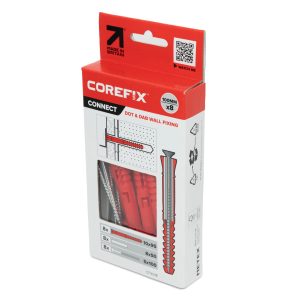
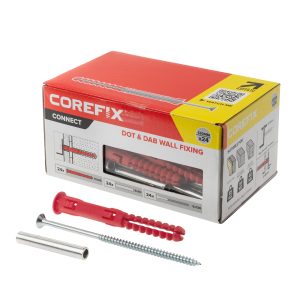
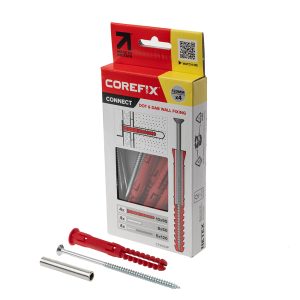
Fixing to modern dot and dab walls made simple. Our patented Connect fixing system transfers the load directly to the solid masonry behind the plasterboard, offering a safe, reliable solution for heavy items like TVs, radiators and cabinets.

REFINE PRODUCTS

By Sub Category:

By Brand:

By Use:

Showing all 9 results

FAQs about Corefix Dot & Dab Fixings

How do I to tell if a wall is dot and dab?

Dot and dab walls (also called drylining) are made up of plasterboard attached to a solid blockwork wall behind using blobs of adhesive, leaving a gap of usually 25–50mm between the two. The easiest way to check is to knock on the wall – if it sounds hollow in most places but solid in patches across the wall, it usually means dot & dab. You can also push a thin bradawl or sharp implement gently into the wall or drill a small pilot hole. If it passes through easily and then meets resistance, that’s a good sign you’ve hit the void.

How do I find the solid wall behind the plasterboard?

The simplest way to find the solid wall behind dot and dab plasterboard is to drill a small pilot hole to find out the void depth so you know how long your fixings need to be. A stud finder can also help identify any timber frames or battens within the wall. If you’re close to a socket or switch, the back boxes are often fixed directly to the solid wall, which can give you a rough idea of the void depth in that area.

Do Corefix dot & dab fixings work in thermalite, celcon blocks or aerated concrete?

Yes they work in thermalite, for very crumbly or porous materials we recommend turning off the hammer function on the drill and starting with a 9mm hole instead of 10mm for a tighter fit for the plug.

How much weight can a dot & dab fixing hold?

This varies depending on the fixing type, but the Corefix Connect dot & dab fixings have a 55kg Safe Working Load (40kg in aerated concrete).

Why can't I just use a standard wall plug and screw in dot & dab walls?

Standard wall plugs are designed to grip solid masonry or timber. In a dot & dab wall, the drill bit passes through plasterboard into an air gap before reaching the solid masonry, so a regular plug will simply sit loose in the board with nothing to grip against.

While regular frame fixings might reach into the masonry, they risk crushing the plasterboard inwards into the gap when the screw is tightened. For dot & dab walls, you need a fixing specifically designed to bridge the gap and anchor into the solid wall behind.

What's the maximum cavity depth Corefix Connect fixigs work with?

This depends on the thickness of the plasterboard – overall the max. recommended distance from the outer surface of the plasterboard to the block is 45mm for Corefix Connect dot & dab fixings to work properly.

Can you mount a TV on a dot & dab wall?

Yes, provided you use suitable dot & dab fixings and the weight of the TV is covered by the fixings’ load rating. The Corefix Connect dot & dab fixings for example have a Safe Working Load of 55kg per fixing. Our TV mounting guide has further advice and tips!